A formula for your own potential.
AI should multiply what you can do — not your monthly bills, and not what companies know about you.
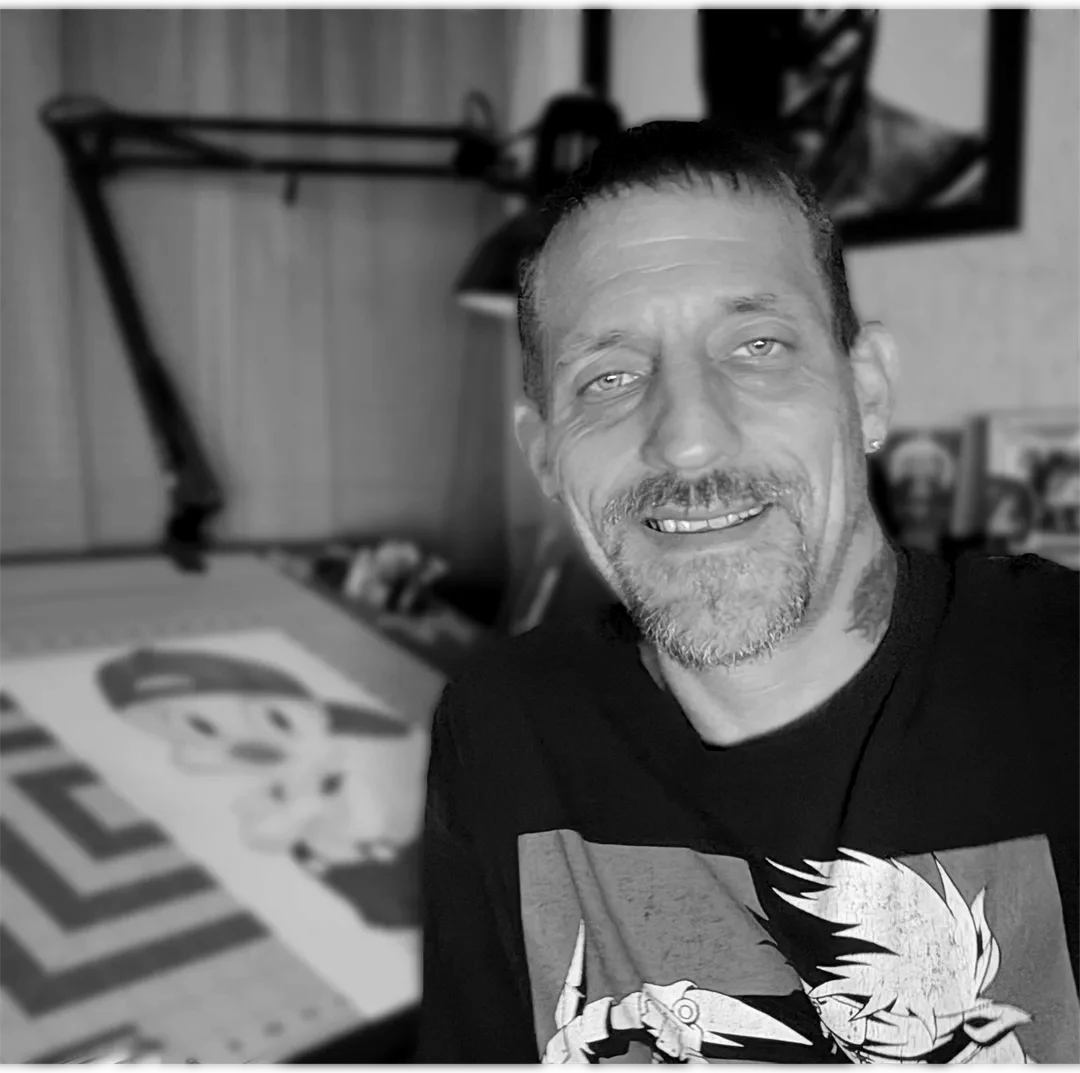
Hey, I'm David.
In September 2025, I was afraid to open a terminal on my own computer.
Today, Neurolayer Labs has an ecosystem of AI products live and launching: built solo, from scratch, no investors, no team.
Here's how that actually happened, because the real story didn't take ten months. It took eight years.
I'm 46, from Indiana. I spent over twenty years in construction and the trades, with runs through customer service, delivery, and automation controls. I've been an artist since I was a kid tracing comic panels, and self-taught in nearly everything that matters to me. I learned to swim by jumping off the dock and figuring it out on the way back. That's been my method for everything since.
In 2018, AI-generated art showed up. I hated it. Then I tried it, and fell down the rabbit hole, not for the images but for the how. How does it know? I spent the next five years finding out. Using the tools, breaking them, learning to prompt before most people knew what prompting was, folding AI into my art and then into everything else. To anyone watching, it looked like a hobby. It was training.
The click came helping my son with coding homework. I taught myself enough HTML to keep up, asked an AI to fix a bug, and it did. That's when I understood what those five years were for: I didn't need to already be a coder. I needed to know how to work with the machine. I had that.
There was something else I kept noticing in those years, on job sites and in break rooms. Almost nobody around me was using AI. People in their twenties, people my age, people older, men and women, all the same story: not using it, barely even talking about it. A whole stretch of working people were about to get left behind by the biggest shift of our lifetime. I decided I wanted to be part of the solution instead of part of the gap. That is what Neurolayer Labs is really for: closing it.
So in 2025 I bet everything on it. Quit the job, packed up my dog Pepper, moved in with family, and left myself no way back, only forward. First product live in November 2025. Rebuilt bigger by January. And now: a suite of connected tools. Browse, capture, learn, with more coming. One ecosystem, one subscription, never more than $10.
That price isn't a promo. It's the point. I build with AI so one person can do the work of a team, and I pass that math on to you. Affordable, private, local-first tools for people improving themselves, built by someone doing exactly that.
The long nights are real. So is what they built.
That's me. That's why this exists.
The Timeline
The rabbit hole.
AI-generated art appears. David hates it, tries it, and starts five years of learning how the machine thinks.
The plan.
An idea on paper becomes a commitment: an ecosystem of AI tools, built solo. The job, the apartment, the way back — all gone.
NeuroBrowse v1 ships.
First product live on the Chrome Web Store.
The rebuild.
NeuroBrowse v2 launches; NeuroNotes ships alongside it.
Neurolayer Labs.
A company now — two products live, an ecosystem taking shape.
The lab gets deeper.
Full brand system built; every product aligned under one identity, one roof. Behind the scenes: David builds his own AI voice assistant — a personal agent for daily work — and begins training Neurolayer's own model.
The ecosystem launches.
NeuroLearn ships. Browse, capture, learn — one subscription, everything connected. And this is just the start.